Table Of Content

It’s much more efficient managing and gathering data from a single source. The convenience of responsive web design makes it an ideal option for companies seeking to deliver a superior digital experience for users. It has also become much easier to achieve responsive designs with the help of the layout methods you have learned in these lessons.
What is responsive web design?
That is why Websites are made Responsive now so that they can be viewed on any screen. Additionally, with just one website, other elements of your marketing will be much easier to manage. Responsiveness takes much of the stress out of managing a business website. Read on to find out why responsive design is so important to your company’s website, and also read the responsive design pros and cons you should know about before investing in a redesign. The class specified in the media query above (hereIsMyClass) will work only if the browser or screen width is above 600 pixels.
Design Ancy agency website template including 🧳:
Because of the easy organized columns, though, we can also collapse them quite simply when needed, and we can stack them vertically when the space doesn’t allow for a reasonable horizontal span. When the browser is minimized or the user is on a smaller device, the columns first collapse into two and then into one. Likewise, the horizontal lines for break points also change in width, without changing the size or style of each line’s title text. In addition to designing for both landscape and portrait (and enabling those orientations to possibly switch in an instant upon page load), we must consider the hundreds of different screen sizes. Yes, it is possible to group them into major categories, design for each of them, and make each design as flexible as necessary. But that can be overwhelming, and who knows what the usage figures will be in five years?
Showing or Hiding Content
It shouldn’t require countless custom-made solutions for each new category of users. You can customize the content of any template as you wish to set up your site in less than an hour. If you already have a website, you can benefit from the templates by studying how their design changes from one device to the next. Set a base value for your font size and scale it to fit each major breakpoint.
The problems with responsive design - Digiday
The problems with responsive design.
Posted: Thu, 02 Apr 2015 07:00:00 GMT [source]
You can also use a free tool, like Google’s Mobile-Friendly Test, to see if pages on your website are mobile-friendly. While you can achieve mobile-friendliness with other design approaches, such as adaptive design, responsive web design is the most common because of its advantages. Responsive web design allows webpages to adjust to different devices’ screens, displaying consistent content across devices.
The browser then works out the size of these, a size that will change according to the screen size. Several layout methods, including Multiple-column layout, Flexbox, and Grid are responsive by default. They all assume that you are trying to create a flexible grid and give you easier ways to do so. Reposition and resize items anywhere within the grid to produce powerful, responsive layouts — faster and without code. The template has already been optimized and is ready for you to make various replacements and changes to suit your needs. It guarantees that visitors won’t experience long loading times and can quickly access your information.
The value can be either landscape (horizontal orientation) or portrait (vertical orientation). This is just one example of the kind of thinking that makes responsive Web design truly effective. But even with smart fixes like this, a layout can become too narrow or short to look right. In the logo example above (although it works), the ideal situation would be to not crop half of the illustration or to keep the logo from being so small that it becomes illegible and “floats” up.
It can be turned into an impressive user experience to catch the visitor's eye longer. We’re Digital Butlers, real IT and marketing experts who have created a platform for your future creations. The template is fully customizable with a typical Webflow style and was crafted by our best designers to make your work comfortable for many years to come. Continuously testing website’s responsiveness across different devices and browsers. Responsive Web Design – Websites that look bad when they are viewed on mobile are non-responsive. These websites decrease the market value of the brand which is not a very good thing.
JavaScript
The only piece in the layout that changes with the browser width is the blog post’s date, which moves above the post’s title or to the side, depending on how much horizontal space is available. Beyond this, the only thing that changes is the width of the content area and the margin space on the left and right. Everything is centered, so a sense of balance is maintained whatever the screen or browser width. Because of this design’s simplicity, switching between browser and screen widths is quick and easy. The min-width property sets a minimum browser or screen width that a certain set of styles (or separate style sheet) would apply to.
In our default style sheet below, we have hidden the links to the sidebar content. Because our screen is large enough, we can display this content on page load. Above are a few examples of how media queries, both from CSS 2.1 and CSS3 could work. Let’s now look at some specific how-to’s for using CSS3 media queries to create responsive Web designs.
In this digital age, where users access the web on a plethora of devices and screen sizes, creating a website that looks and functions well on all these platforms has become the need of the hour. To create responsive designs, UX designers work with fluid grids and images. You must work closely with developers to specify breakpoints and test if they render correctly. Responsive design is achieved through a mix of flexible grids and layouts, images, and an intelligent use of CSS media queries. As the user switches from their laptop to iPad, the website should automatically switch to accommodate for resolution, image size, and scripting abilities.
12 Design Trends to Inspire Your New Website or Refresh Project - Influencer Marketing Hub
12 Design Trends to Inspire Your New Website or Refresh Project.
Posted: Wed, 16 Aug 2023 07:00:00 GMT [source]
Create a production- ready composition for a responsive webpage, conveying your vision through typography, layout, and color. You’ll learn to give and receive design critique and implement feedback to improve your designs. Limited browser capabilities meant that for Internet Explorer, the layout could adapt dynamically in the browser whereas, for Netscape, the page had to be reloaded from the server when resized. In this image, you can see how the placement of the columns is rearranged depending on the screen real estate available.
Now, instead of designing multiple websites for different screen sizes, you can design just one website that scales up or down automatically to match the device it’s being viewed on. After a while, the design does stress a bit and could benefit from some rearrangement of content. But overall, the image resizing and flexible content spaces allow for a fairly simple solution that accommodates a wide range of screen sizes. A few examples of CSS properties related to responsive web design include the viewport and media queries. Responsive web design is when a website automatically adjusts to various screen sizes, so users can view the same content on computers, phones, tablets and other devices. Responsive web design is the practice of adjusting a website to fit different screen sizes, allowing a site to display properly on computers, mobile phones, tablets and other devices.
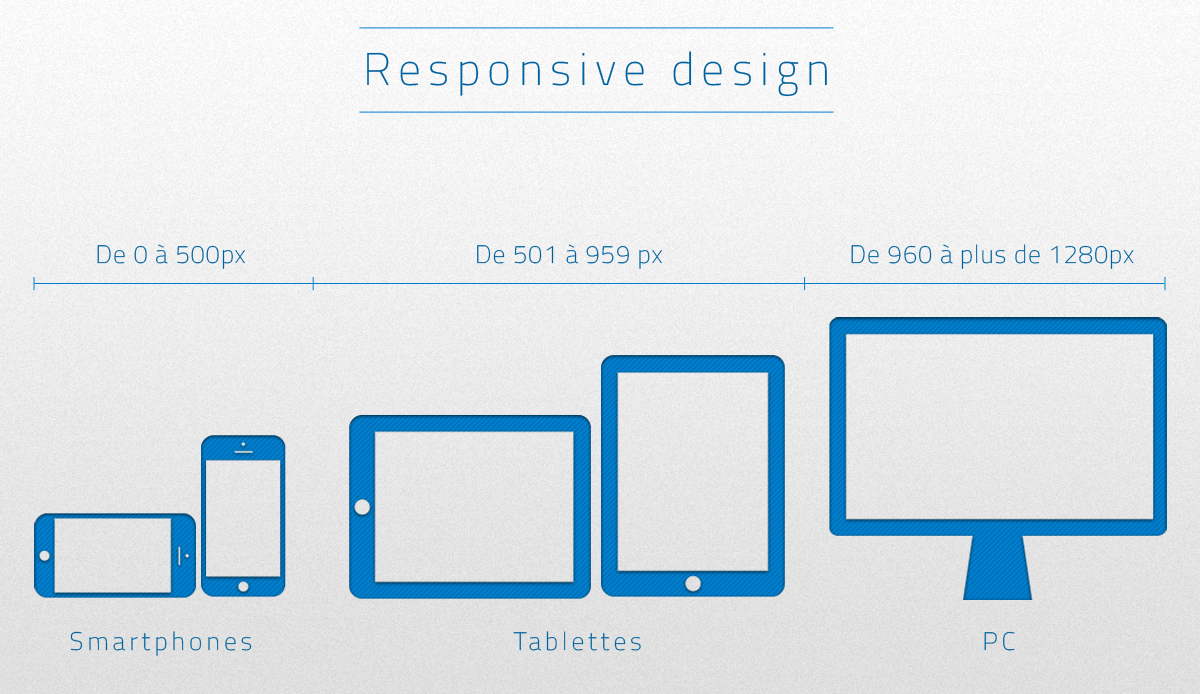
Maintaining separate sites for your mobile and non-mobile audiences can get expensive. By using responsive design, you can save money by eliminating the cost of paying for a mobile site. You will only need to invest in a single site design to appeal to all visitors and all devices. This is perhaps the simplest example of a responsive Web design in this showcase, but also one of the most versatile.
At the design’s narrowest stage, the navigation is super-simplified, and some inessential content is cut out altogether. Below we have a few examples of responsive Web design in practice today. For many of these websites, there is more variation in structure and style than is shown in the pairs of screenshots provided. Many have several solutions for a variety of browsers, and some even adjust elements dynamically in size without the need for specific browser dimensions.


No comments:
Post a Comment